HEALTH-INSider
a
Home > Health > Blood Sugar & Cholesterol
Ohio Woman's 18-Month Diabetic Nightmare Ends When Daughter Discovers What 9 Endocrinologists Missed
The molecular mechanism silently damaging five organs in diabetics and the Sri Lankan spice extract a $412.9 billion diabetes industry has no reason to ever study.
📅 Written: August 5th, 2026 · 198,442 👁
Rachel Whitfield · Health & Wellness Contributor

Rachel Whitfield will never forget the moment she realized her mother was disappearing.
It was a Tuesday evening in June 2024.
She'd stopped by after work to check on her mom's medications, like always.
But when she walked into the kitchen, she found her 67-year-old mother Helen staring at the pill organizer spread across the table.
"I can't remember which ones I've already taken," she whispered.
"And I'm too tired to figure it out.

The woman who'd taught third grade for 32 years, run the church potluck every month, and never missed a grandkid's birthday had just spent 40 minutes trying to sort all her prescription bottles.
She'd given up halfway through.
For eighteen agonizing months, they'd been trapped in a medical maze that seemed to have no exit.
Nine different endocrinologists.
Multiple daily medications at once.
$38,000 in bills that insurance only partially covered.
And not a single answer that made sense.
What every single one of those endocrinologists missed would shock not just Rachel, but eventually wake up an entire community of diabetics to a truth the pharmaceutical industry refuses to acknowledge.
But first, let me show you exactly how bad it got.
When Mom Stopped Being Herself
Helen Whitfield used to be the kind of woman who never sat still — grading papers at 6 AM, volunteering at the food pantry on weekends, hosting the entire extended family every holiday.
But by early 2023, she couldn't get through a morning without lying down.
The symptoms just kept coming, one after another:

Constant exhaustion that sleep couldn't fix — "bone tired," she called it
Trouble sleeping, no matter how exhausted she was
A tingling numbness in her feet she blamed on new shoes
Blurry vision some mornings that cleared by lunch
A constant urge to pee at night, sometimes twice
A tightness in her chest climbing the porch steps
The medical carousel spun faster with each new symptom.

By month fourteen, Helen's medicine cabinet looked like a pharmacy shelf:

Metformin (blood sugar — first agent tried)
Lisinopril (blood pressure and kidney protection — added early on)
Gabapentin (nerve pain — added when the tingling in her feet got worse)
And her eyes were being watched — quarterly photos at the ophthalmologist, no pill for that one yet.
Her kidneys were being watched too — a urine test every visit to watch for protein leaks, no pill for that one either.
At her last appointment, her endocrinologist brought up adding Ozempic next.
The list kept growing.
"They had her on something for every symptom," Rachel recalls, her voice tight with old frustration.
"But not one of them ever asked why her body was falling apart in every direction at once.
They just kept saying it was 'just her diabetes.'"
The breaking point came when Helen's A1C climbed from 7.2 to 8.1 in four months, despite following every dietary restriction, taking every medication exactly as prescribed, attending every appointment.
"I'm doing everything right," Helen told Rachel that night, staring at her lab results.
"Why am I still getting worse?"
Her voice cracked on the last word.
"I used to have so much energy.
Now I can barely make it through the day. I feel like I'm watching myself disappear."
Before Finding The Truth, The Whitfields Spent:
$4,200 on liver ultrasounds, a cardiac stress test, a nerve conduction study, and a kidney function panel ("mild fibrosis, borderline arteries, early nerve damage, protein in the urine")
$2,800 on specialist consultations ("manage your blood sugar and monitor")
$1,900 on dietary counseling ("cut the carbs and the sugar")
$890 on medication adjustments ("let's try adding one more")
Plus $28,000+ in ongoing treatment costs over 18 months
We paid nearly $38,000 to be told nothing could be done except slow it down, Rachel says.
The answer cost us $40.

The 2 AM Discovery That Changed Everything
Rachel barely slept anymore…
Most nights, she'd lie awake scrolling through medical journals on her phone, searching for anything the nine endocrinologists might have missed.
She'd become obsessed with one question:
Why does a diabetic's body break down in so many places at once?
Every doctor gave the same answer: blood sugar, weight, genetics.
But none of them could explain why her mother's decline was accelerating despite controlling all those factors.
It was during one of these desperate late-night research sessions that Rachel found a line in a peer-reviewed study that made her sit straight up in bed:
"Type 2 diabetes is a disease of the blood vessels disguised as a disease of blood sugar," the study read. "The A1C number is just the surface. The real damage is the sugar trapped in the blood, grinding through the lining of every blood vessel in the body, every day, for years."
"I read that sentence five times," Rachel remembers.
"Then I started shaking. Because not one doctor had ever mentioned this. Not once in eighteen months."

Here's what she found:
Trapped sugar doesn't just sit still in your blood.
It moves. With every single heartbeat, it circulates — and it grinds.
It grinds against the lining of every blood vessel in your body, every day, for years. That lining has a name: the endothelium.
And it's the same tissue, no matter where it sits — in the vessels feeding your liver, your nerves, your retina, your kidneys, your heart.
Trapped-sugar Chain Cycle
Liver damage. Neuropathy. Retinopathy. Kidney decline. Heart attack risk.
Not five separate complications.
Five expressions of the exact same trapped sugar, grinding through the exact same kind of tissue, in five different places.
Rachel had a simpler name for it: the real reason her mother kept getting worse in every direction at once, despite doing everything right.
And here's the part that stopped her cold.
Metformin. Apple cider vinegar. Berberine. Diet. Fasting. Even newer drugs like Ozempic. Even statins for the arteries.
Every single one of them only reduces how much sugar goes in.
Not one of them gets the trapped sugar out of the blood.
The number on the chart can drop.
The grinding underneath doesn't stop.
A1C is lying to you.
"It's like sandpaper running through the same hose, nonstop, for twenty years," Rachel says. "Of course something eventually wears through."
Every single medication Helen was taking reduced a number. Not one of them stopped the grinding, or healed a single damaged vessel.
The Question That No Doctor Could Answer
The next morning, Rachel called her mother's endocrinologist — the ninth one they'd seen.
"I've been reading about the endothelium — the lining inside blood vessels," she said.
"Is there a way to actually heal that, not just lower the number that's damaging it?"
There was a long pause.
"That's… not really something we treat," the doctor finally said.
"We focus on managing the contributing factors. Blood sugar, blood pressure, diet."
"But those are downstream," Rachel pressed.
"The studies say the vessel damage is upstream. It's the actual mechanism causing the damage."
Another pause.
"I understand your concern. But there's no FDA-approved medication for that specifically. We work with the tools we have."
Rachel hung up and sat in silence for ten minutes.
The Rabbit Hole That Led to Sri Lanka
That night, Rachel went deeper.
If the endothelium grinding was the root cause, and conventional medicine couldn't address it, what could?
The answer appeared in a study out of the University of Peradeniya in Sri Lanka:

"Two compounds found together in true Ceylon cinnamon work on two different parts of the same problem. MHCP signals the cells to start opening the doors again — the GLUT4 transporters that stopped responding to insulin years ago. Cinnamaldehyde goes to work on the endothelium itself, helping the vessel lining heal and produce nitric oxide again."
Rachel read it three times to make sure she understood.
MHCP could bond directly with those dormant doors and start pulling trapped sugar out of the blood before it ever reached a vessel wall. Cinnamaldehyde could reach the endothelium already ground down by years of grinding, and start healing it from the inside.
Two compounds in a spice most people have sitting in their kitchen cabinet right now.
But there was a problem.
The cinnamon in most kitchen cabinets is cassia, a different species entirely.
To get true Ceylon cinnamon, verified at the species level, you need Cinnamomum verum — not the cheaper plant sold under the same name on most store shelves.
Rachel found study after study showing results:
Diabetic patients taking concentrated Ceylon extract showed a 29% reduction in fasting glucose within 40 days
Vascular studies showed improved endothelial function and nitric oxide activity within weeks
Cell studies showed the dormant GLUT4 doors reopening within weeks of consistent dosing
A 2024 meta-analysis of 28 trials covering 3,000+ patients confirmed the same pattern across
populations
"I couldn't believe what I was reading," Rachel says.
"This wasn't alternative medicine. This was peer-reviewed research. And no American doctor had ever mentioned it."
Then she found out why.
Why Your Doctor Has Never Heard Of This

Cinnamon has been used for blood sugar support for centuries.
Small studies have confirmed the mechanism for over a decade.
In America?
Barely a mention.
Not because it doesn't work.
Not because it's dangerous.
But because:
There's no patent on cinnamon.
You can't patent a plant that's grown in Sri Lanka for a thousand years.
And without a patent, there's no pharmaceutical profit model.
No drug company will spend $2 billion on FDA trials for something anyone can grow in their own backyard.
So the research sits in journals.
Doctors never learn the dosing in medical school.
Patients never hear about it from specialists.

Meanwhile, diabetes costs the American health care system $412.9 billion a year, according to the American Diabetes Association's own 2022 economic report — most of it treating the downstream damage of the same trapped sugar that was never addressed upstream.
"I was furious," Rachel admits.
"For eighteen months, we'd been told nothing could be done. But something could be done. There just wasn't any money in telling us about it."
The Extract That Almost Didn't Make It To America
Rachel's next discovery came from a supplement industry newsletter.
A small ingredient importer had spent three years building direct relationships with Ceylon cinnamon farms in Sri Lanka, DNA-testing every harvest to confirm it was true Cinnamomum verum, not cassia sold under the same name.
But they'd almost shut down twice.
First, a major contract manufacturer offered to white-label their extract for a national retail chain — then demanded they cut the concentration down to "shelf-standard" levels that wouldn't require DNA verification or coumarin testing.
They refused.
Then a cassia importers' trade group filed a complaint with the FTC, claiming the company was making "unsubstantiated health claims," despite linking to peer-reviewed research for every statement.
Those complaints triggered a five-month review that nearly bankrupted them.
"We were three weeks from closing," the company's founder told an industry newsletter.
"Then we got a $120,000 order from an endocrinology clinic in Texas that had been following our testing data. They said their patients deserved real Ceylon, not cassia. That order saved us."
The company's name: Noralife.
Their product: a 12:1 concentrated Ceylon cinnamon extract, suspended in MCT oil, delivering the exact 7,200mg equivalent dose used in the published clinical trials.
Rachel ordered a pouch that night.

The First Week: Rachel Almost Gave Up
The Noralife pouch arrived four days later. Rachel set it up in her mother's kitchen and explained how it worked.
"You take two softgels with breakfast. That's it," Rachel said.
Helen looked skeptical. After eighteen months of complex medication schedules, dietary restrictions, and specialist appointments, something this simple felt… wrong.
"If this worked, wouldn't my doctor have told me?" she asked.
Rachel didn't have an answer. Just hope.

Helen took her first dose that morning.
And the next.
And the next, again.
Days 1-3: Nothing obvious. Maybe slightly less foggy, but Helen wasn't sure if she was imagining it.
Days 4-5: Helen slept through the night without waking to use the bathroom or burning foot pain. First time in over a year.
"I thought it was a fluke," Helen admits.
"So I didn't say anything. I didn't want to jinx it."
Days 6-7: The itching started easing. She stopped scratching her arms raw before bed.
Day 8: Helen made breakfast without needing to sit down halfway through.
Rachel noticed but stayed quiet.
She'd been disappointed too many times.
Day 10: Helen called Rachel at work.
"Something's happening," she said.
"I feel… clearer. Like someone cleaned a window I didn't know was dirty."

The Numbers That Made Rachel Cry
Helen's next endocrinologist appointment was scheduled for November 22nd — exactly 82 days after she started taking Noralife.
Rachel almost canceled it.
Part of her didn't want to know.
The improvements felt real, but what if the numbers told a different story?
She went anyway.
Helen gave her blood sample.
They waited.
When the results came back, the endocrinologist frowned at her computer screen for a long moment.
"There must be an error," she said.
"I'm going to order this rerun."
Rachel's heart stopped.
"What's wrong?"
"Nothing's wrong. That's the problem. This doesn't make sense."
Helen's A1C had been 8.1 in early September.
The November 22nd reading: A1C 6.7.
Not stabilized.
Not slightly improved.
A1C down one point four in eighty-two days.
"That's not supposed to happen this fast," the endocrinologist said slowly.
"Blood sugar doesn't move like this. Damage like hers doesn't reverse like this either. We manage decline. We don't see numbers move like this."
Rachel started shaking.
She'd prepared herself for another "it's progressing as expected" conversation.
Not this.
"I wanted to believe it," Rachel remembers.
"But I'd been hurt too many times. So I did something the doctor probably thought was crazy."
She ordered an independent test kit from LetsGetChecked — a third-party lab with no connection to the hospital.
She needed confirmation from a source she controlled.
The results came back three days later: A1C 6.9.
Not identical to the doctor's reading, but close enough.
Both showed the same direction.
Both confirmed what Rachel was afraid to believe:
Her mother's whole body was actually healing.
"I Don't Know What You Did, But Keep Doing It"
Helen's endocrinologist ordered additional tests.
Fasting glucose.
Liver function panel.
Kidney function panel.
Inflammatory markers.
Every reading had improved.

The endocrinologist sat back in her chair and took off her glasses.
"In twenty years of practice, I've never seen numbers move like this in someone your age," she said.
"What did you change?"
Helen glanced at Rachel.
"I started taking a Ceylon cinnamon extract. My daughter found research about how trapped sugar damages my blood vessels. She got me this supplement with the actual clinical dose in it."
The endocrinologist was quiet for a moment.
"I'm not familiar with that research," she finally said.
"But I can't argue with these numbers. Whatever you're doing — keep doing it."
She paused.
"Would you mind telling me what it's called? I have other patients who might benefit."

What Happened When Rachel Started Talking
Rachel posted her mother's story in an online diabetes support group.
She included the before and after A1C numbers, the timeline, screenshots of both test results.
Within 48 hours, she had 200+ comments and 50+ private messages.
Most were skeptical:
This sounds too good to be true.
My endocrinologist never mentioned this.
Is this an ad?
But some were desperate:
My husband's fasting glucose is 152 and won't come down no matter what he tries, and now his ALT is 210. He's staring down a liver biopsy. Please tell me exactly what you did."
"My A1C has been stuck above 8 for years and the neuropathy in my feet is so bad some nights I can't sleep. What's the name of the extract?"
Rachel answered every message personally.
She shared the Noralife website.
She explained the research about trapped sugar grinding through the endothelium.
She told them to verify everything themselves.
Then the stories started coming back.
Gerald Whitmore, 61, Texas
Type 2 diabetic, A1C stuck at 8.3, Stage 2 fatty liver with ALT at 88 for two years
★★★★★
"I've had blood sugar problems for years from bad eating habits and stress. My doctor told me my liver enzymes were staying high no matter what I tried. I decided to try Noralife before my next appointment, hoping it could make a difference. When I went back for my follow-up, the results shocked both me and the doctor.
He said everything was functioning normally — my fasting glucose was back to normal, and my liver enzymes had dropped into the healthy range too. He even checked my thyroid.
Everything was clean. My dad passed away four years ago. He struggled with his liver his whole life. I only wish he'd had the chance to try something like this. I'll never be without Noralife again."
Patricia Owens, 63, Florida
Type 2 diabetic, fasting glucose stuck above 160, neuropathy for 3 years
★★★★★
"I've been managing my blood sugar for over a decade. On top of that, my feet burned like they were on fire most nights, and no medication touched it. Apparently that's just something you live with once the nerve damage sets in. I did my research and found Noralife.
I stuck with it for about ten weeks. The burning is gone, and my fasting glucose came back in range too. Even the doctor was impressed and wanted the name of it. I've recommended it to a few friends and they got results too. Don't give up if it feels like nothing works."
Denise Coyle, 69, Arizona
Type 2 diabetic, A1C climbing past 8, higher heart risk
★★★★★
"After my diagnosis, I felt hopeless. Every appointment was bad news. My A1C climbed to 8.4 and my doctor kept warning me my heart attack risk was climbing right along with it, despite doing everything my doctors told me.
My granddaughter found Rachel's post online and sent me the link. I was skeptical — I've tried so many supplements that did nothing. But after reading about how trapped sugar damages blood vessels everywhere, including the arteries feeding the heart, and how MHCP and cinnamaldehyde work together to reopen that pathway and calm the inflammation, the science made sense. I ordered it.
About twelve weeks later, my A1C was down to 6.8, and my cardiologist said my numbers finally looked like someone who wasn't headed for a heart attack. My doctor literally said 'what happened here?' I told him about the cinnamon extract. He wrote down the name. For the first time in two years, I have hope."
The Pattern That Couldn't Be Ignored
Rachel started tracking the reports.
Within three months, she had documented 52 cases from people who'd found Noralife through her posts:
72% reported less burning and tingling within two weeks
63% showed improved fasting glucose and liver enzymes at their next visit
57% said their doctors asked what they'd changed
79% reported the nighttime itching fading within a month
"These aren't my customers," Rachel emphasizes.
"I don't sell anything. These are people who found the same research I found, bought the same extract I bought, and saw similar results."
Noralife's own numbers tell a bigger story:
Over 100,000 Americans have now purchased Noralife.
17,000+ five-star reviews.
12,000+ documented repeat customers.
My husband came off two of his blood sugar medications.
My mom's doctor said she might never need a liver biopsy now.
I got my mother back.

Why They Don't Want You To Know About This
In December 2024, Rachel received a strange email.
It was from a "healthcare compliance consultant" requesting a call about her "public claims regarding diabetes complications and treatments."
Rachel ignored it.
A week later, her original support group post was flagged and removed for "promoting unverified medical information."
She'd included links to peer-reviewed studies.
Didn't matter.
She reposted. It was removed again.
Then she noticed something else: targeted ads for diabetes drug programs had started appearing on her social media feeds. Lots of them.
"I'm not paranoid," Rachel says.
"But I'm also not stupid. Diabetes costs America $412.9 billion a year. That money depends on blood sugar staying a lifelong problem. What happens to that business model if bodies start healing and people come off three prescriptions?"
She found her answer in the ADA's own economic report:
People with diagnosed diabetes spend, on average, $12,022 more a year in medical costs attributable to the disease.
A softgel that costs $39.95 and requires no prescription, no specialist visits, no insurance approval?
That's not a product. That's a threat.
"I understand why my mother's endocrinologist never heard of this," Rachel says.
"There's no profit in prevention. There's no shareholder value in reversal. The system isn't designed to help you get better. It's designed to manage you getting worse, expensively."


What The Research Actually Shows
Rachel wants to be clear: she's not a doctor.
She's not making medical claims.
She's sharing her mother's results and the research she found.
That research, on both MHCP and cinnamaldehyde together, includes:
Diabetes Care (2003): Khan et al. found cinnamon extract produced a 29% reduction in fasting glucose in type 2 diabetic patients within 40 days.
Journal of the American College of Nutrition: MHCP measured up to 20 times more effective at activating the insulin signaling pathway than other natural compounds tested.
International Journal of Pharmacology (2022): Cinnamaldehyde reduced ALT, AST, and key inflammatory markers in a liver injury model, supporting its role in liver tissue repair.
Archives of Biochemistry and Biophysics: Ceylon cinnamon extract shown to increase the number of active glucose transporters at the cell surface.
2024 meta-analysis, 28 trials, 3,000+ patients: Ceylon cinnamon supplementation associated with measurable improvements in fasting glucose.
1. Trapped sugar circulates and grinds against the endothelium → the lining of every blood vessel in the body, everywhere it flows
2. That grinding damages the lining wherever it sits → in the vessels feeding the liver, the nerves, the retina, the kidneys, the heart
3. Damaged lining stops producing nitric oxide and can't stay smooth → blood flow drops, tissue starves, organs decline
4. The cycle continues → until fibrosis, cirrhosis, nerve damage, vision loss, kidney failure, or a heart attack
MHCP interrupts this cycle at step one:
it reopens the GLUT4 doors and pulls the trapped sugar out of the blood before it can grind against a single vessel wall anywhere in the body — liver, nerves, eyes, kidneys, or arteries.
The grinding stops.
Cinnamaldehyde goes to work on the damage that's already been done — helping the endothelium itself heal and start producing nitric oxide again, wherever it sits in the body.
Blood flows back to the places it stopped reaching.
With the grinding stopped and circulation restored, the body finally has what it needs to repair itself.
Bile acid processing comes back online. The tingling in the feet fades. The nighttime bathroom trips stop. The blurry mornings stop. The chest tightness eases.
Two compounds. Two jobs. One ingredient. One stops the sugar from grinding through your vessels. The other helps the vessels heal.
"I'm not saying this will work for everyone," Rachel emphasizes.
"I'm saying the mechanism makes sense, the research is real, and it worked for my mother. You can verify all of this yourself."

Why Noralife Ceylon Cinnamon Specifically
Rachel has been asked this hundreds of times: why this extract and not another one?
Her answer is technical and important:
Most cinnamon supplements use standard dry-powder capsules.
This can include true Ceylon cinnamon — but without a fat carrier, the compounds have nothing to cross your cell walls with.
For a healthy body, small amounts probably don't matter much.
For a liver, nerves, eyes, kidneys, and arteries already being ground down by trapped sugar?
You're taking a compound your body can't even absorb, while the label tells you it's working.
Noralife uses a 12:1 concentrated extract suspended in MCT oil — an engineered delivery system built specifically to carry fat-soluble compounds through the cell wall.
"I spent two weeks researching alternatives," Rachel says.
"The $12 bottles on Amazon don't DNA-test their bark. They don't publish coumarin levels. For my mother's blood vessels, I wasn't willing to guess."
Noralife publishes third-party lab results for every batch showing:
Exact Ceylon concentration (clinical-grade 12:1)
Zero measurable coumarin
No heavy metals or contaminants
"You can see the difference," Rachel adds.
"True Ceylon looks like tightly rolled cigars — thin, delicate layers. Cassia is one thick, hard quill. Hold the Certificate of Analysis next to the pouch and it's not a guess anymore. It's documented."

How It Actually Works
Using Noralife is almost embarrassingly simple:
Step 1: Open
Tear open the resealable pouch. No mixing, no charging.
Step 2: Take
Two softgels, once a day, with a meal.
Step 3: Absorb
The MCT oil carries both compounds into your bloodstream within the hour.
Step 4: Repeat
Same time, same two softgels, every day. That's the entire routine.
Helen takes hers every morning with breakfast. Total time investment: fifteen seconds.
"After eighteen months of tracking medications, scheduling appointments, and planning meals around five different problems at once," Rachel says, "this feels like cheating. But the numbers don't lie."
What Helen's Life Looks Like Now
Fourteen months after starting Noralife, Helen Whitfield is a different person.
Her A1C has settled at 6.1 — down from 8.1 at its worst. Her liver enzymes are back to normal, the numbness in her feet is gone, her kidney function has stabilized, her last eye exam came back clean, and her cardiologist says her heart attack risk has dropped for the first time in years.
She never started the Ozempic her doctor had brought up. She's also off the nerve pain medication entirely
She sleeps through the night.
She's back at the kitchen table grading papers for the students who still stop by.
"Last month, she hosted the whole family for my daughter's graduation dinner," Rachel says.
"She made her sheet cake from scratch. A year ago, she couldn't stand at the counter long enough to frost it."
Helen's endocrinologist has reduced her appointments from monthly to quarterly.
"She told me I'm her most interesting case right now," Helen laughs.
"I'm not sure if that's good or bad, but I'll take it."
The moment that still makes Rachel cry happened three weeks ago.
She stopped by her mother's house unannounced and found Helen in the backyard, kneeling in the dirt, planting tulip bulbs for spring.
"When she looked up, soil on her hands, sun on her face — I saw my mother again," Rachel says.
"The one I thought I'd lost. I sat down right there in the garden and cried like a baby."
The Cost Of Doing Nothing
Rachel understands why people hesitate.
She hesitated too.
After eighteen months of disappointment, false hope felt dangerous.
But she's also learned to do the math:
Helen's pre-Noralife medical costs: $38,000+ over 18 months
Monthly prescription costs: $340
Cost of staying diabetic and managing nothing else: $12,022 a year, every year, according to the ADA's own numbers.
Cost of a heart attack and its aftermath, if she'd continued declining: several hundred thousand dollars in emergency care, procedures, and lifetime medication — and that's assuming she survived it.
Cost of Noralife: $39.95 (currently on sale from $79.90)
"I'm not saying money should be the deciding factor," Rachel says.
"But if you're already spending thousands managing decline, what's $39.95 to potentially stop it?"
More importantly: what's the cost of waiting?
Trapped sugar doesn't take breaks.
The trapped sugar cycle doesn't pause while you research.
It runs every day, every hour, accumulating damage that becomes harder to reverse over time.
Rachel watched her mother's A1C climb toward 8, month after month, while doing everything "right."
"Every day you wait is a day the cycle keeps running," she says.
"I wish I'd found this eighteen months earlier. I can't get those months back. But I can tell other people so they don't lose theirs."
The Guarantee That Removes All Risk

Noralife offers something Rachel has never seen from a health product:
60 days. Full refund. No questions asked.
If you don't see improvement — in your numbers, your energy, your symptoms, or just how you feel — email them.
They'll refund every penny, no hassle.
Less than 1% of their customers ever ask.
"I've used it," Rachel says.
"I emailed their support with questions before I ordered. They responded the same day. These aren't robots. These are people who actually answer."
The guarantee means the financial risk is zero.
The only risk is biological: the cost of the days and weeks the trapped sugar cycle runs while you decide.
What You Get Today
Noralife — the same extract Helen takes — normally sells for $79.90 a pouch.
Right now, through this page, it's available starting at $39.95.
That's 50% off, with savings of up to 73% on larger orders, while current inventory lasts.
When this batch sells out, DNA-verification and coumarin testing on the next harvest mean restocking takes 6-8 weeks, and the price returns to full retail.
Currently available: 118 units. Noralife has already sold out 12 times this year.
Here's What To Do Next

Click the big green button that says "GET UP TO 73% OFF Noralife Now" — it'll take you straight to our official, secure website.
Once there, all you need to do is click the button that says "CLAIM MY DISCOUNT TODAY ONLY" and your discount will automatically apply.
You'll be taken straight to the checkout page, where you just need to enter your name, address, and payment information, and select how many pouches of Noralife you'd like to order.
Most people end up ordering THREE or FIVE pouches.
One, because it's a 5-month supply, and this isn't something you take for two weeks and stop.
Two, because it's a great gift for a spouse or family member — especially with what the packaging looks like.
And isn't a health-improving gift the best gift you can give to a loved one?
It's even better when you and a loved one can take it together!
And three, because the more you order, the more you save.
We pass on the savings to you, so larger orders mean bigger discounts.
So if you know someone who could benefit from Noralife — whether a friend, family member, or coworker…
Or if you simply want enough to not run out for the next five months…
I suggest you take advantage of this one-time deal and click the button below to get Noralife at the lowest price ever.
Remember, There Is ZERO Risk

60-Day Money-Back Guarantee

Fast Shipping

Secure Checkout

Easy Returns
The only risk you might face… is the regret of missing out on the chance to get Noralife at this massive discount.
Unfortunately, I know what happens when people pass up an opportunity like this — I've seen it time and again with other families.
And it's not a good outcome.
You'll keep wasting time on temporary fixes that don't tackle the real issue.
You might try restrictive diets, pills with side effects, or endless doctor visits, but these won't get to the root of the problem.
Sure, you may get some relief here and there…
and you might convince yourself that you can live this way.
But as time goes on, the trapped sugar grinding against your blood vessels will only grow worse.
And the trapped sugar cycle will keep running.
I'm not saying this to scare you; I'm saying it to warn you.
If left untreated, this can turn into a much bigger issue over time.
That's why the decision you make today could be one of the most important for your future health.
So… what's it going to be?
Are you going to say "NO" to this opportunity and take your chances?
Or are you going to do the right thing…
Order three or five pouches of Noralife…
and spend the next 60 days working toward a body that actually heals?

Remember… this isn't just about you.
It's about your family — who will worry constantly if your health declines because you didn't take the chance to support it.
It's about your grandkids, who may never get to enjoy active time with you if your health holds you back.
It's about your partner, who may end up feeling alone even while you're still there — because you're just not able to be yourself.
If you're ready to take the step that matters, click the big green button below to order your Noralife.
And remember — if it doesn't work as promised, you don't pay.
You owe it to yourself and to your loved ones to give this a shot.
You can turn things around. You can find the relief you've been looking for.
You can reclaim your energy and fully enjoy your years ahead.
Many families have already done it, and you can too — all with a little help from the extract I recommend to everyone who asks: Noralife Ceylon Cinnamon.
It's 5x Cheaper Than A Month Of Prescription Copays — And 100% Natural — Free Of Side Effects
So, without further ado…
If you're ready to take the step that matters…
Click the big green button below to order your Noralife.
And remember — if it doesn't work as promised, you don't pay.
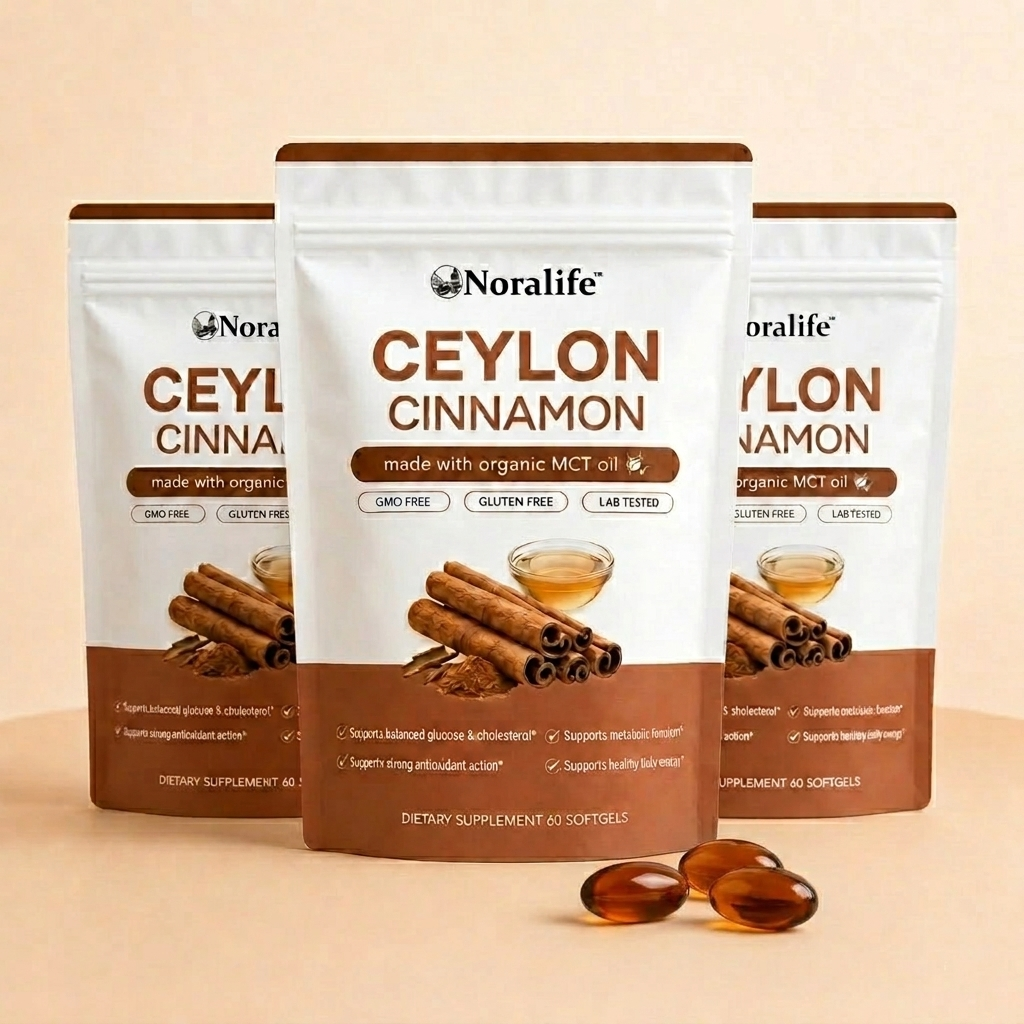
🎁 BUY MORE, SAVE MORE
BUY 2 GET 1 FREE
FOR A LIMITED TIME ONLY!
Sell-Out Risk: HIGH
Try it today with a 60-Day Money Back Guarantee!
Finally Get Real Results from Real Ceylon Cinnamon for your Blood Sugar Support

Limited Supply Warning
True Ceylon from Sri Lanka takes time to source and verify.
Each batch is small, and production is intentionally limited.
Once it's gone, the next batch won't be ready for months.
MEDICAL & HEALTH DISCLAIMER: The information provided in this article is not intended and should not be construed as medical advice, nor is it a substitute for professional medical expertise or treatment. If you or any other person has a medical concern, you should consult with your health care provider. Never disregard professional medical advice or delay in seeking it because of something you have read on this page.
THIS IS AN ADVERTISEMENT and not an actual news article, blog, or consumer protection update. The owners of this website receive compensation for the sale of Noralife. Results depicted in testimonials represent individual experiences and may vary.
© 2026 Noralife™ . All right reserved.